

Asset-backed securitisation on the other hand is an asset class that derives its value on a pool of granular retail loans, with significant structural protections. The stability of returns, high liquidity in form of monthly cash flows, and very predictable and non-binary credit outcomes puts it in a class of high-quality fixed income products.
What is Securitisation?
Securitisation is a process where retail loans are pooled and repackaged as interest-bearing securities. Securitisation enables investors to take exposure to granular retail loan assets where the deep diversification and granularity ensures better credit outcomes vs exposure to a large chunky asset such as a receivables from a corporate business.
A securitisation transaction involves shifting the assets from the balance sheet of the originator to a Special Purpose Vehicle or SPV. True Sale of assets to the SPV as per the RBI guidelines and the resulting alienation of the assets from the balance sheet of the originator ensures that loan assets sold are immune to any bankruptcy action [if any] on the originator. In the Indian market, these pool of assets are sold to the investors in the form of pass-through certificates (PTCs), which are like bonds in nature [ ie dematerialized/ tradable/ rated security] The PTC cash flows mirror by and large the EMI cash flows of the retail loans along with significant credit protection placed by the Originator which cushions the impact of missed EMIs and defaults of the retail loans and ensures a stable cash flow to the PTC investor.
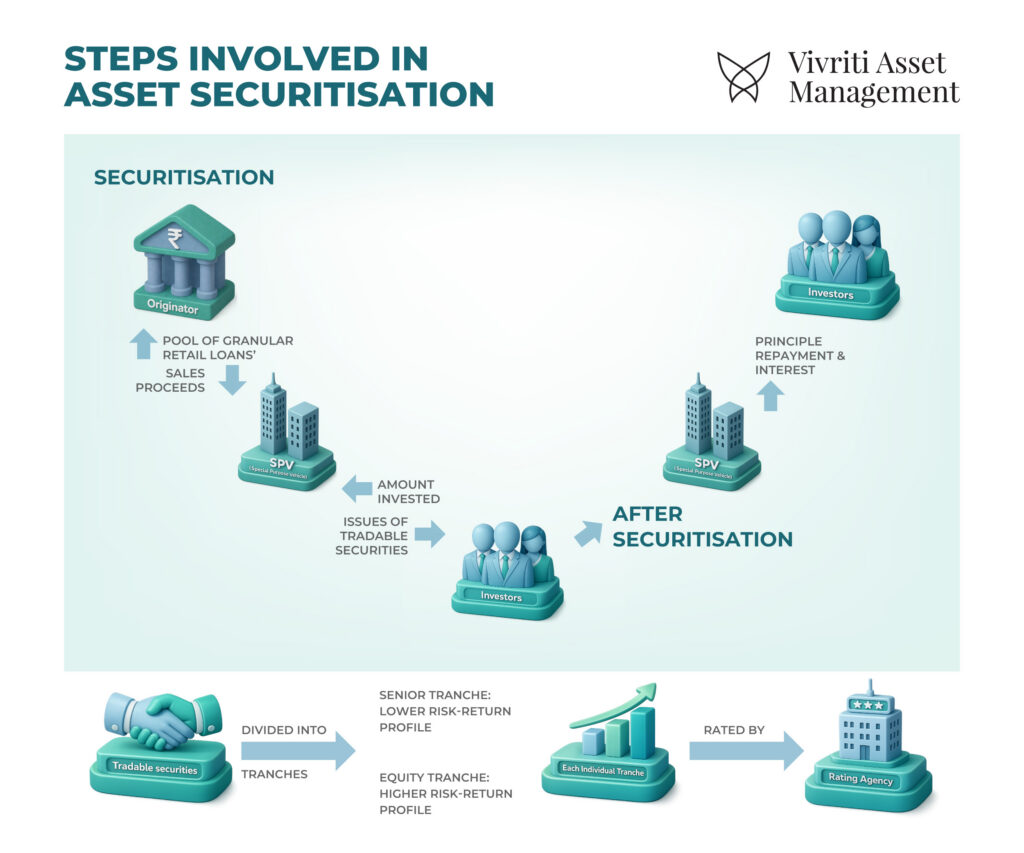
Banks are the dominant investors in PTCs. While banks capture lion’s share, NBFCs, mutual funds, AIFs, wealth market and institutional investors are also increasingly looking at securitization.
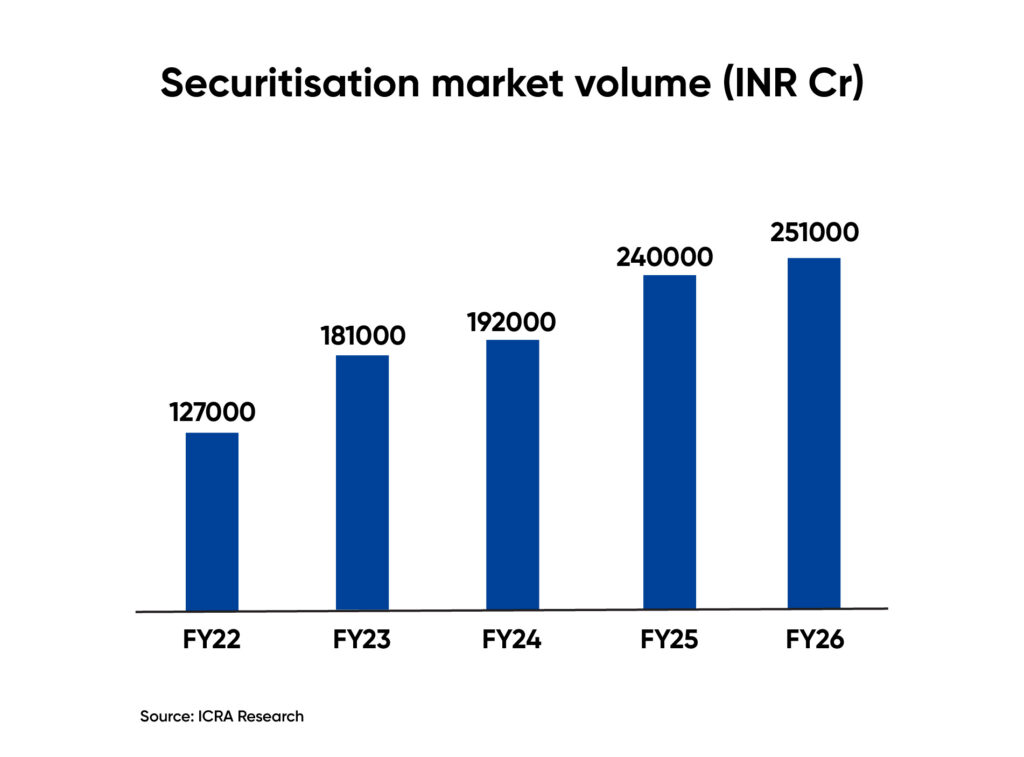
The annual securitisation volume in India depicted a steady rise over the years. Securitisation volumes surpassed INR 2.5 lakh crore in FY26. The NBFCs continue to remain the majority originators of PTCs with some issuances by Banks. Nevertheless, the total volume in India pales in comparison with the developed economies and is poised to grow as alternate asset classes develop and also as alternate pools of capital such as private wealth, regulatory capital such as insurance and pension funds and other domestic and global pools of capital looking for quality credit investing find their appetite for this asset class.
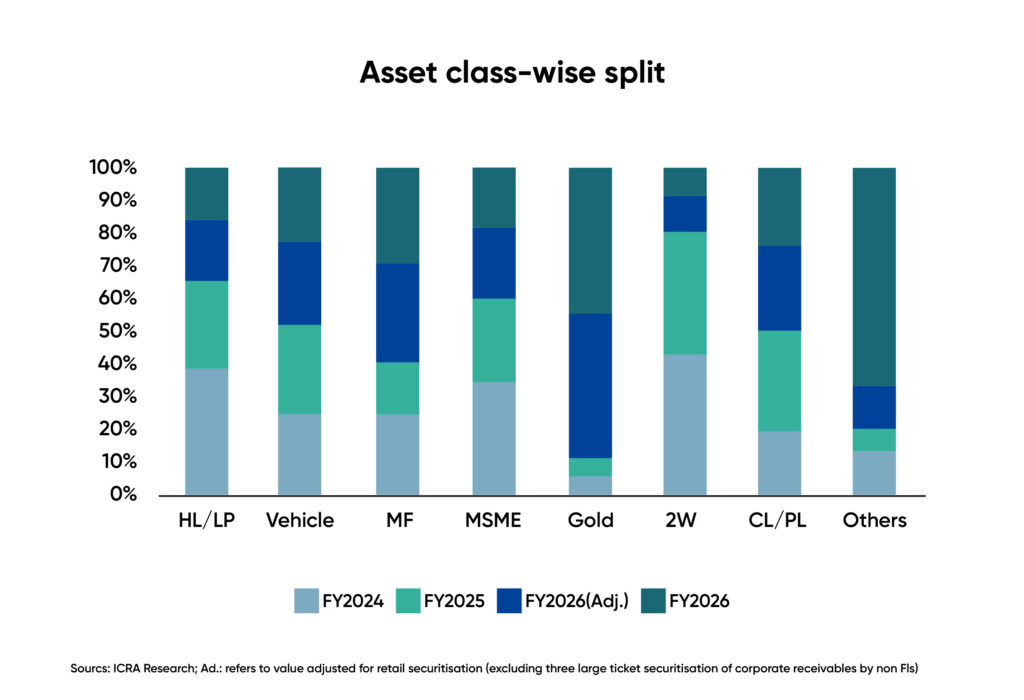
Commercial Vehicle loans continued to be the dominating asset class in India’s securitisation market with MSME loans, MFI loans and consumer contributing to the majority of the balance. The Commercial Vehicle segment has presence of handful of very large NBFCs with good rating and established vintages and with significant priority sector lending (PSL) assets to sell. For these entities managing a large liability base is paramount and PTCs with its PSL nature offer a cheaper alternative to raise liability. This explains the large share of Commercial vehicle. PTC investors prefer tenors ranging from 18 months to not more than 3-4 years. Hence mortgages [home loans] with its high tenor and low yields don’t find appetite within the PTC investment community. On the other hand, consumer loans, though Non PSL, but with shorter tenors and comparatively better yields have off late found lot of appetite within the PTC investor community.
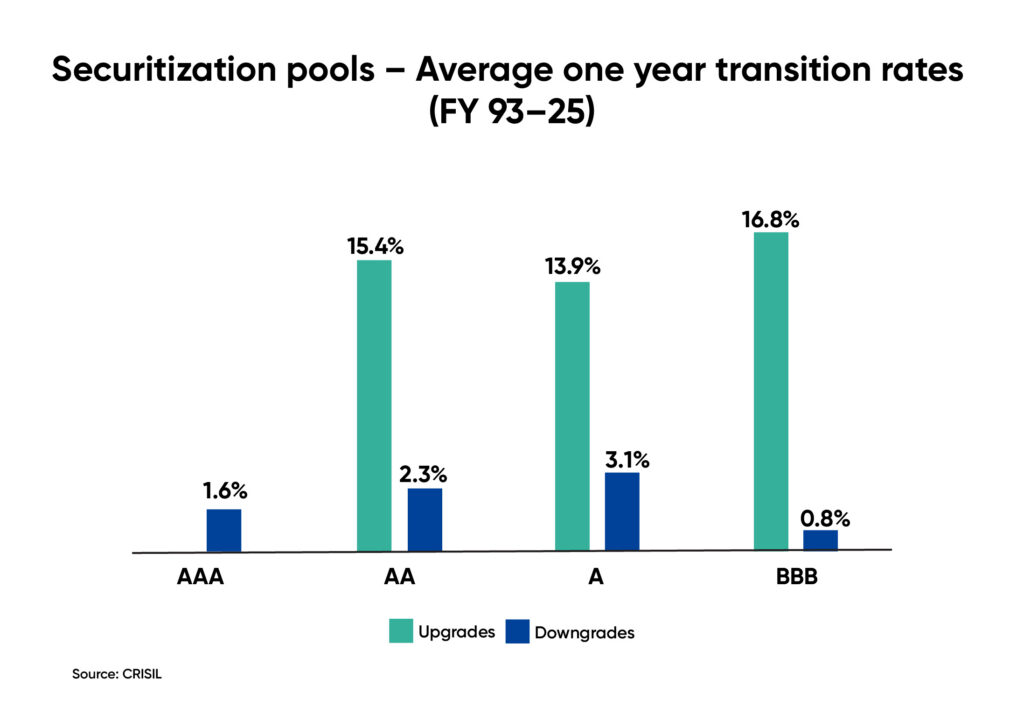
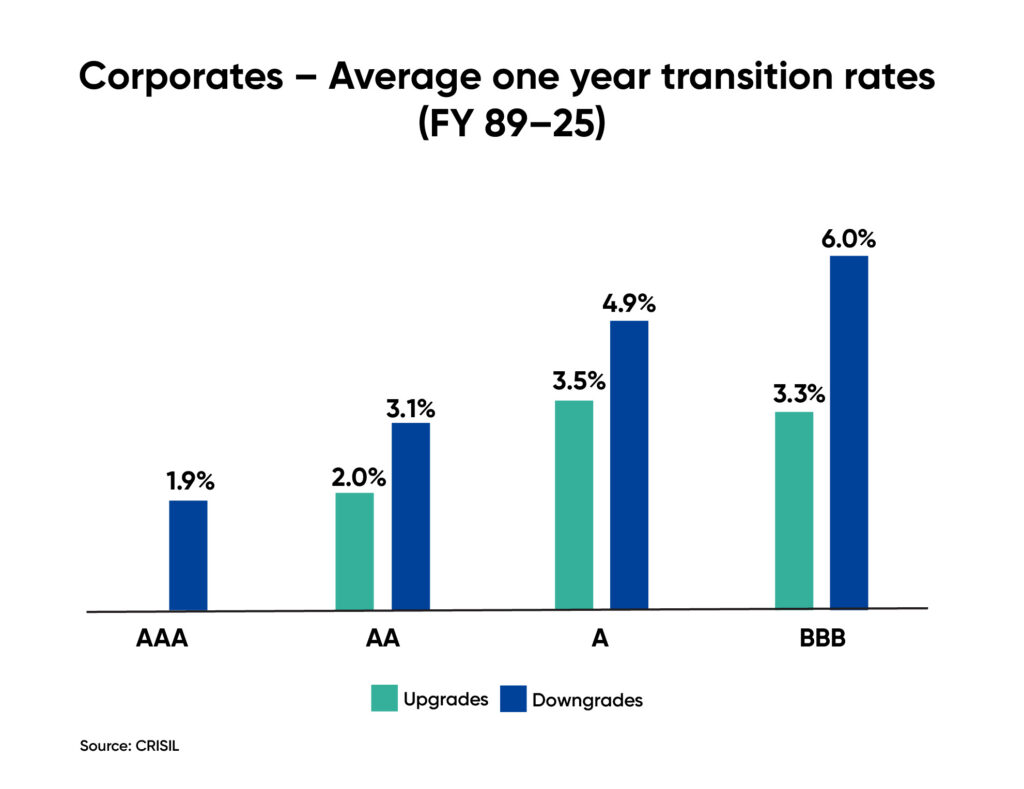
Securitization pools or PTCs in India have outperformed similarly rated corporate bonds over a long period, offering better credit risk management through structural enhancements like cash collateral and over-collateralization. Over-collateralization in simple terms is the additional loan assets provided by the originator to the SPV to cushion the impact of lower collections/ delinquencies in pool impacting PTC performance
As per one-year transition rates study — which indicates the number of instances credit ratings of an instrument [ be it a PTC or a corporate bond] are upgraded / downgraded over a specific period — retail loan backed PTCs have exhibited a higher number of upgrades to downgrade ratio compared to corporate bonds in a similar ratings scale.
Regulators and Stability of Regulations: Over the past few decades, RBI has been focusing on developing the securitisation market by providing a robust and stable regulatory mechanism. Indian regulators learnt from the excesses of the Global Financial Crisis of 2007-2008 and framed guidelines, starting from 2012, around securitization, which are considered amongst the most conservative globally. Consequently, across cycles over the past 15 years securitization performance across originators has been stellar and outperformed corporate credit performance. The guidelines have more or less been stable since its first introduction. The increasing volumes year on year, increasing number of originators doing securitization and increasing diversity of capital pools allocating in the product is proof of the development of the asset class amongst discerning investors.
Regulations that align incentives: RBI has stipulated strict norms for Minimum Holding Period (MHP)- a minimum time that assets need to be held in books before sale to SPV, essentially discouraging originate to sale models, and Minimum Retention Requirement (MRR)- essentially the skin in the game of the originator, with originator invariably taking first hit of pool delinquencies ensures that originator incentive is aligned to continue to collect the pool to the best of ability. This has ensured better asset selection [cherry picking of loan assets by the PTC investors] and consequently better pool credit performance.
Surveillance and public rating actions by Rating Agencies: Rating agencies like ICRA, CRISIL, India Ratings, and others provide independent, third-party credit assessments of underlying asset pools, enhancing investor confidence, supporting market liquidity, and enabling regulatory compliance. Their ratings help investors evaluate default risk without undertaking detailed, asset-level analysis across large portfolios. The monthly collections continue to be reviewed by the Rating Agency with periodic rating actions just like bonds but with more predictable and quantifiable outcomes.
What’s in it for Investors via Private Credit AIFs
The scope for Private Credit AIFs in India’s securitisation market is structural and long-term. The predictable credit outcomes, monthly income, public data availability and granularity make PTCs the most suited for quality fixed income allocation within Private Credit
Private credit AIFs can make securitised instruments palatable for HNIs and family office investors by bringing sophistication in structuring, credit underwriting, and risk pricing. Within Private Credit AIFs, institutions having capacity to underwrite, structure and most importantly track the high-volume retail data of the underlying loans of a PTC- running to thousands of data points on a monthly basis- will thrive and have a natural right to win.
Disclaimer: The information provided in this article is for general informational purposes only and is not an investment, financial, legal or tax advice. While every effort has been made to ensure the accuracy and reliability of the content, the author or publisher does not guarantee the completeness, accuracy, or timeliness of the information. Readers are advised to verify any information before making decisions based on it. The opinions expressed are solely those of the author and do not necessarily reflect the views or opinions of any organization or entity mentioned.