

Budget 2026-27: Growth and fiscal discipline in focus with capex at the core
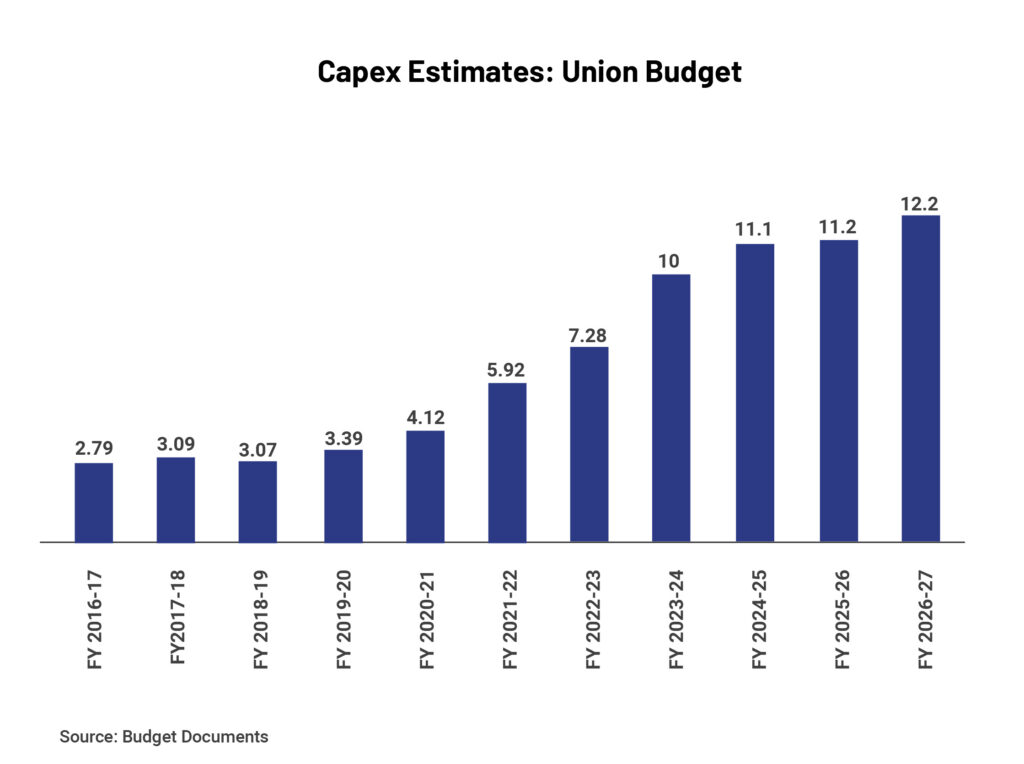
The Union Budget 2026–27 laid heavy stress on India’s sustainable economic growth, with capital expenditure remaining the focus. The capital expenditure for FY 2026-27 is earmarked at INR 12.2 lakh crore (3.1% of GDP), reflecting a 11.5% YoY growth and significantly higher than 4.2% YoY increase in FY 2025-26 (Revised Estimates). The rise in capital expenditure outpaced the growth in revenue expenditure, which is 6.6% YoY, led by Jal, Finance, Housing, and Education.
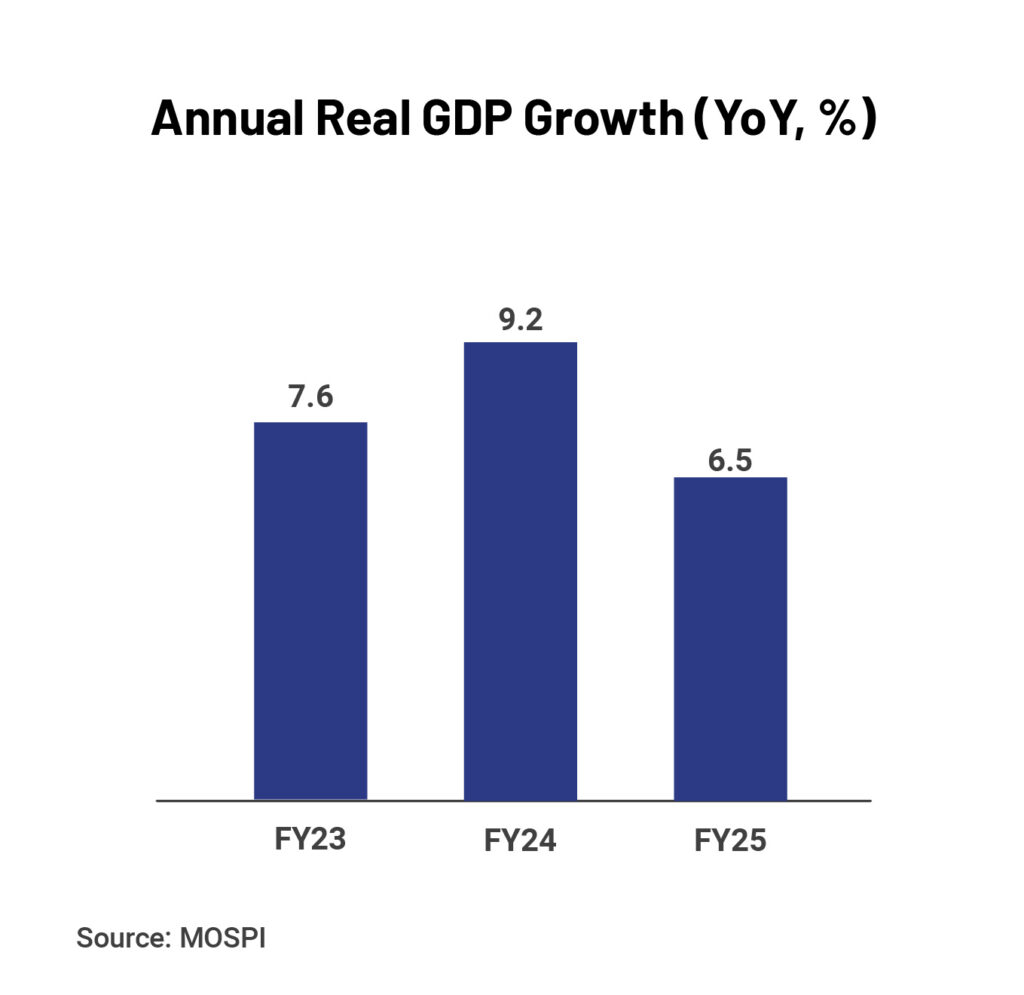
The focus on fiscal prudence remains intact with the government targeting a fiscal deficit of 4.3% of GDP in FY 2026-27 compared to an estimated 4.4% of GDP in FY 2025-26. The Budget has set a medium-term roadmap to reduce debt-to-GDP to 50% by FY 2030-31. India’s real GDP is expected to grow by 7.4 in FY 2025-26, with the services sector remaining the primary growth driver (rose 9.1%). Manufacturing and construction grew 7% while agriculture is estimated to grow at 3.1%.
India-EU signs ‘mother of all trade deals’
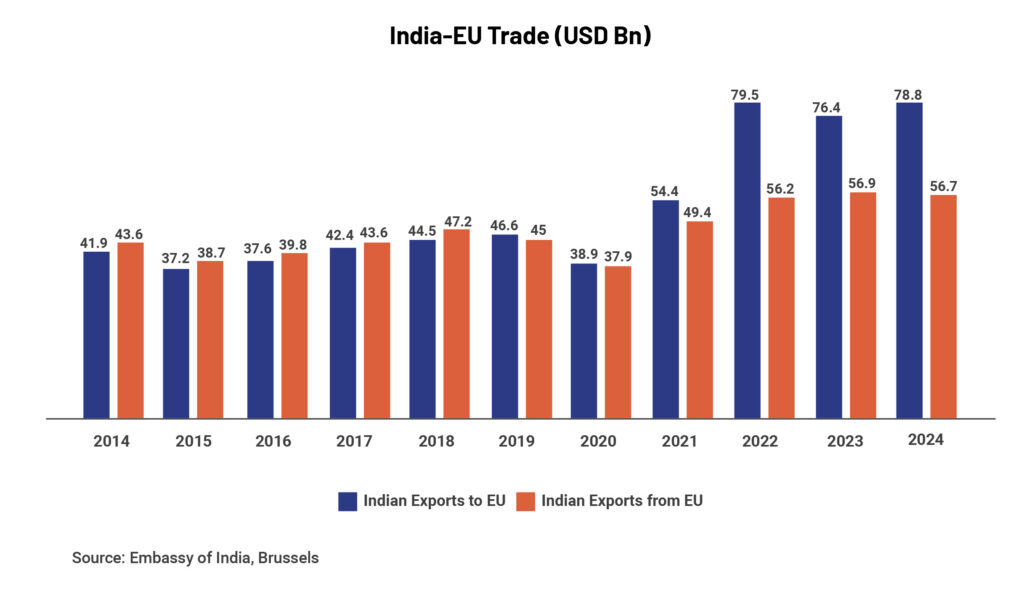
India and the EU signed a free trade agreement (FTA) allowing free trade of goods between the bloc of 27 European states and India, addressing a combined market of nearly US$27 trillion or ~25% of the global GDP. Hailed as the ‘mother of all trade deals’, the FTA would eliminate tariffs on major exports of chemicals, machinery, and electrical equipment, as well as aircraft and spacecraft, following phased reductions, to India. Notably, import duties on automobiles would reduce significantly from as high as 110% to 10% under a quota of 250,000 units. India will also cut tariffs on wine, beer, and olive oil from the EU.
The FTA is expected to support investment flows between the two markets, deepen supply-chain integration, and give India a boost in several sectors, including textiles, pharmaceuticals, machinery, steel, petroleum products, and electrical equipment. Overall, the EU is enabling India access to 144 services subsectors, while India is opening 102 subsectors to the EU. The EU is the second largest market for India’s exports, while India is the ninth largest partner for the EU. The FTA is expected to double EU exports to India by 2032 by slashing tariffs on over 96% of EU goods and 99% of Indian exports.
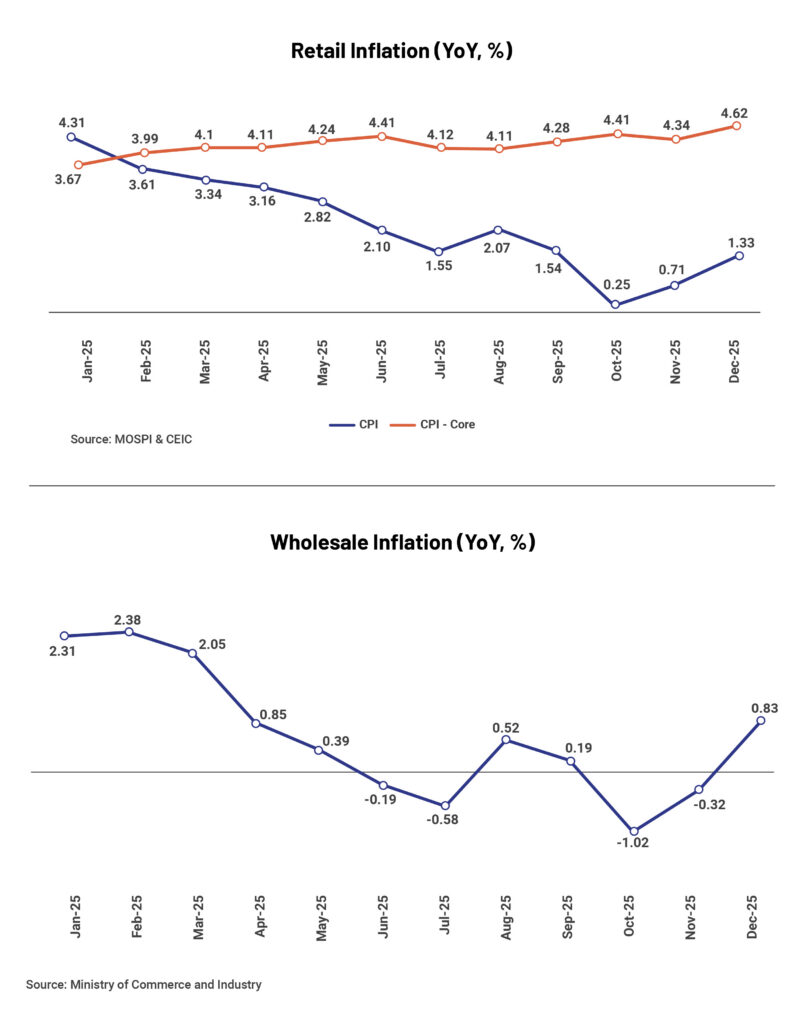
Retail inflation, measured as a change in the Consumer Price Index (CPI), rose to a 3-month high of 1.33% YoY in December 2025. However, it remained significantly below the lower end of RBI’s tolerance range of 2%-6% for the fourth consecutive month. The marginal increase can be attributed to easing deflation in food prices (-2.71% YoY in December vs. -3.91% in November), which accounts for ~47% of the CPI basket. The deflation in vegetables, the third largest component in food segment, also narrowed to -18.47% YoY in December from -22.2% in the previous month. Moreover, Inflation of personal care and effects, meat and fish, egg, and milk and products accelerated, while deflationary pressures for pulses and spices moderated fueling the uptick in retail inflation in December. For April-December 2026, the average CPI stood at 1.72% compared to 4.91% in the same period last year.
The core inflation, which excludes the effect of food and beverages, fuel and light, and petrol and diesel prices, also rose to 4.6% in December 2025. This was driven largely by steady increases in the prices of precious metals such as gold and silver, which have hit record highs amid global uncertainty. Economists expect the headline CPI to come in above 2% in January 2026. The January print will be released as per the new CPI series with 2024 as the base year.
The wholesale inflation (WPI) rose to an 8-month high of 0.83% YoY in December after staying in the negative territory for two consecutive months driven by increase in prices of minerals, manufacture of food products and textiles, among other manufacturing. The softening in deflation of vegetable, pulses, crude petroleum, and natural gas also contributed to the increase in the inflation.
The inflation for manufactured products, the largest component in the WPI basket, rose to a 3-month high of 1.8% YoY in December. The primary articles, which includes minerals, food, and non-food products, recorded an inflation of 0.21% in December after hovering in the negative zone for eight consecutive months. This can be at attributed to mineral prices that stood at 11.86% in December, up from 10.52% in November and subsiding food articles deflation (-0.43% in December vs. -4.16%). However, the fuel and power segment remained in the negative territory for the ninth consecutive month. With this, the average WPI growth for FY26 till date stood at 2.7%, compared to 2.1% in FY25.
The core WPI, which includes non-food manufactured products, jumped to a 34-month high of 2% in December. Economists expect wholesale inflation to continue this upward trajectory for near term supported by unfavourable base, rising prices of metals, and a weaker domestic currency.
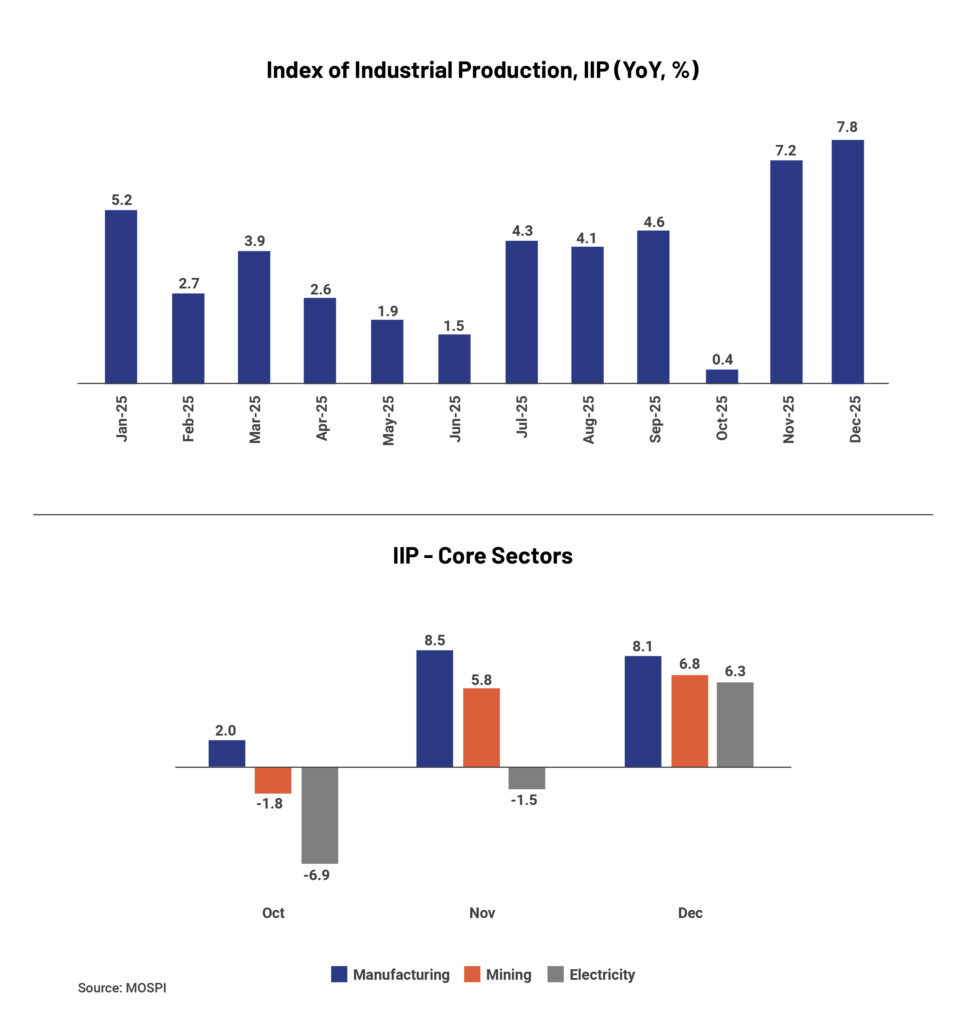
India’s industrial output, which is measured by the Index of Industrial Production (IIP), recorded its fastest growth in over two years at 7.8% YoY in December 2025, rising sharply from 3.7% in December 2024. This can be attributed to mining segment output that accelerated to an 18-month high of 6.8% YoY in December. The electricity output also surged to a 9-month high of 6.3% YoY in December, marking its growth after two consecutive months of contraction.
While manufacturing sector output growth slowed to 8.1% in December compared to an upwardly revised 8.5% last month, it was still the biggest contributor to IIP growth. Within the sector, 16 of the 23 manufacturing sub-components registered a positive MoM growth. The impact of GST rationalisation continues to influence the IIP growth. Economists suggest, this, coupled with low inflation could boost demand, sustaining the IIP growth momentum in near term.
As per the use-based classification, the top contributors to the IIP growth in December are primary goods (4.4% in December vs. 2.2% in November), consumer durables (12.3% vs. 11.2%), consumer non-durables (8.3% vs. 8%), and intermediate goods (7.5% vs. 7.4%). On the other hand, capital goods (8.1% vs. 10.1%) and infrastructure/construction goods (12.1% vs. 13%) showed a moderation in growth. The average IIP growth for April-December 2026 stood at 3.82%, compared to 4.1% a year ago.
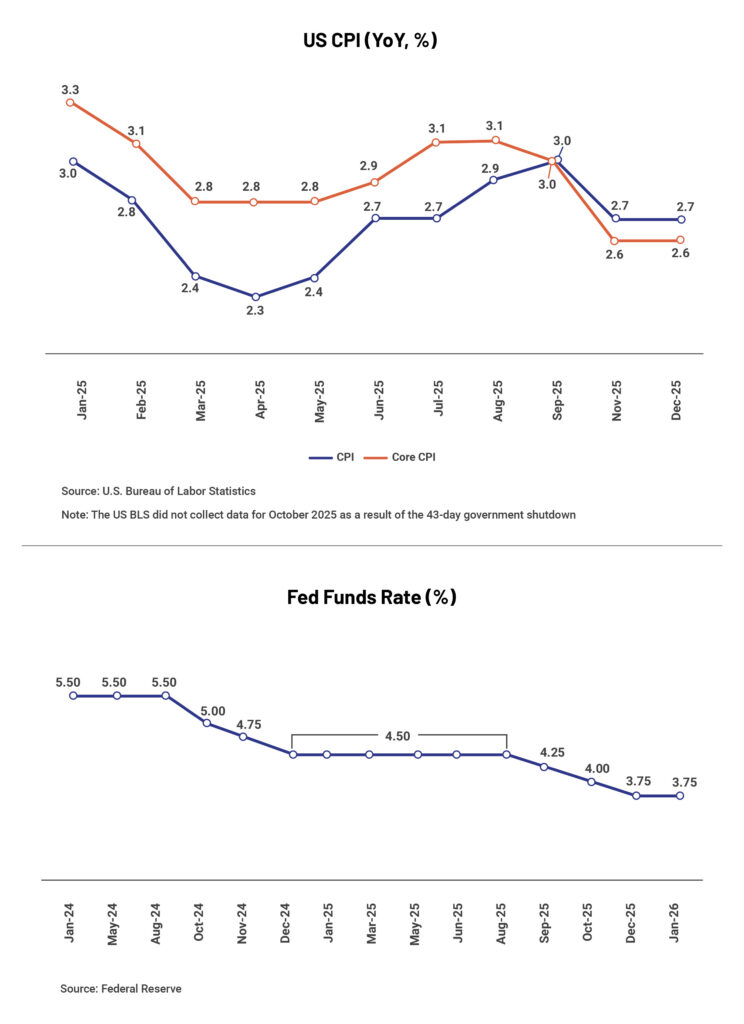
Consumer price inflation in the US stood at 2.7% YoY in December, unchanged from the previous month and in line with the consensus estimates. However, on a seasonally adjusted basis, the consumer price index rose 0.3% MoM in December. The food index grew 3.1% YoY in December compared to 2.6% YoY in November outpacing the energy index, which rose at a slower pace of 2.3% YoY in December compared to 4.2% YoY in November. The slowdown in inflation of gasoline and fuel oil contributed to the easing of price pressures in energy sector.
The core inflation, which excludes volatile food and energy and is considered a better gauge of long-term trends by the US Fed, remained stable at 2.6% YoY in December, the lowest level since March 2021. The print came in slightly below market expectations of 2.7%.
To balance economic growth with stable prices, the Fed has set a long-term inflation target of 2% YoY. Economists estimate that the higher inflation reflects pass-through from tariffs, and it will likely decline to the target level in H2 2026. The US Federal Reserve has kept the repo rate steady at 3.5%-3.75% in its Federal Open Market Committee (FOMC) meeting held in January. While inflation and employment dynamics will continue to remain key factors in the central bank’s monetary policy decisions in the upcoming months, a possibility of a rate cut in the near term is less likely.
Disclaimer: The information provided in this article is for general informational purposes only and is not an investment, financial, legal or tax advice. While every effort has been made to ensure the accuracy and reliability of the content, the author or publisher does not guarantee the completeness, accuracy, or timeliness of the information. Readers are advised to verify any information before making decisions based on it. The opinions expressed are solely those of the author and do not necessarily reflect the views or opinions of any organization or entity mentioned.